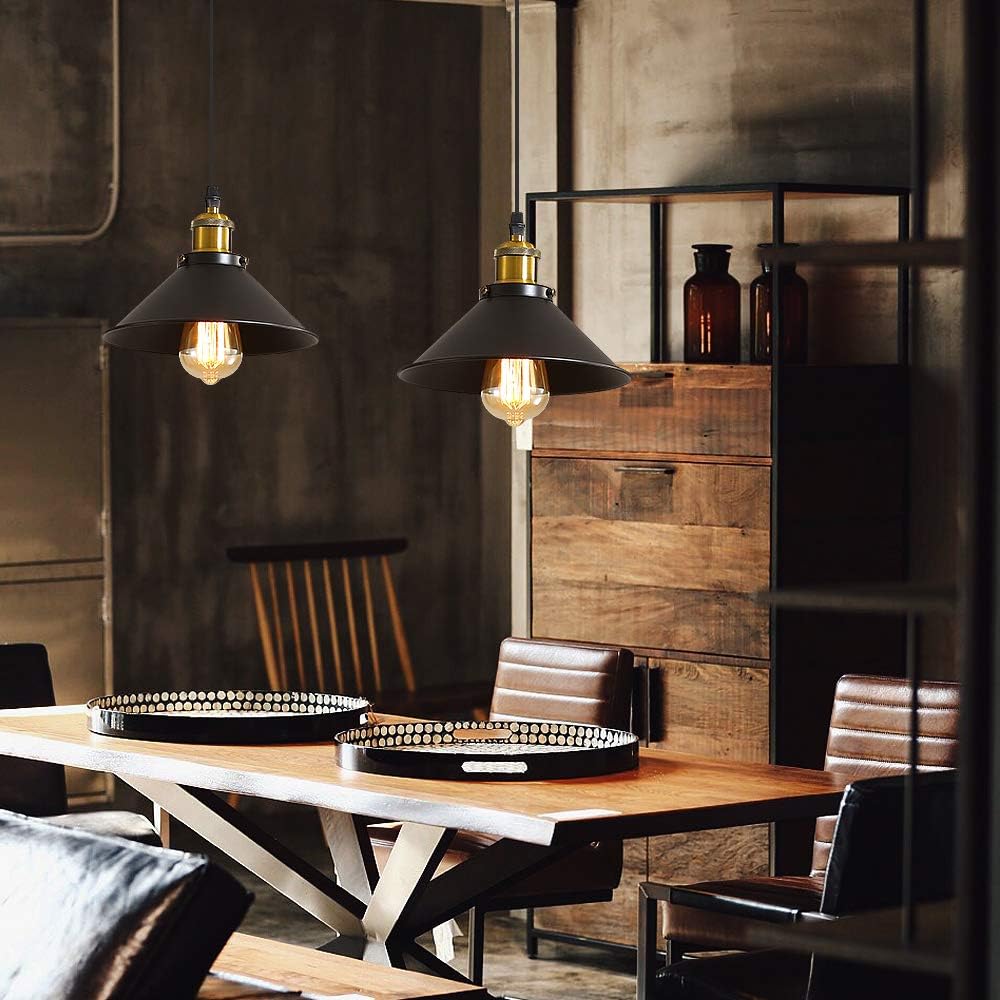
Are Black Light Fixtures Really Versatile? Why Can They Make a Room Feel Heavy?

Black light fixtures are often treated as a safe design choice. They work with timber, white walls, beige upholstery, grey kitchens and many stronger colours. From a matching point of view, that is often true. But black rarely disappears into a room.
Against a white ceiling, a black flush light immediately creates a strong outline. A black wall light on a pale wall becomes a graphic shape. That visibility can give a room definition. It can also make a compact space feel busier or heavier than expected.
Versatile does not mean visually quiet
A colour can work with many palettes while still demanding attention. Black creates contrast, especially against pale ceilings and walls. The stronger that contrast is, the more noticeable the fixture becomes.
One black pendant may look deliberate. Add black window frames, a large television, dark chair legs, picture frames, shelving and several black light fittings, and the room can quickly feel much denser.
Fixture size matters as much as colour
A small black spotlight and a 70 cm black pendant may share the same finish, but they do not have the same effect on a room.
Above a generous dining table, a wide black pendant can balance the scale of the furniture below. In a compact bedroom, that same diameter may dominate the ceiling. The useful question is not simply whether black suits the room. It is how much black surface area will sit in your field of view.
Low ceilings make dark fixtures feel larger
When the ceiling is low, dark objects overhead are harder to ignore. A large black pendant with a deep shade can make the upper part of the room feel closer.
Black can still work. A slimmer profile, a smaller diameter or an open metal frame often leaves more breathing space around the fitting. The empty space around the lamp is part of the composition too.
Contrast with the ceiling and walls changes everything
A black light on a white ceiling is far more defined than the same light against taupe, dark green or medium grey. High contrast makes the outline feel sharper. Lower contrast allows the fixture to sit more quietly in the room.
This does not mean you need dark walls to use black lighting. It means you should look at the actual background. In a pale minimalist room, one black light can be a useful focal point. Five or six repeated black elements can create a very different result.
Repeating black can create cohesion or overload
A black pendant can echo slim chair legs or a small handle on a cabinet. A few repeated details help the finish look intentional.
The problem starts when every item is forced to match. Black lights, curtain rods, handles, frames, shelves, table legs and accessories can form a strong visual network. In a small room, that network can dominate even if each item looks modest on its own.
Open shapes usually feel lighter than solid ones
Two black pendants with the same diameter can feel very different. A solid metal shade creates one continuous dark mass. A thin wire frame lets the ceiling remain visible through it.
In a small or low room, an open structure can keep the graphic quality of black without creating such a heavy block overhead. In a larger room, a solid shade may be exactly the stronger presence you want.
Finish and material also affect visual weight
Matte black reflects very little light. It often looks calm and controlled, but it can also appear denser. Satin finishes, glass and reflective details respond more visibly to daylight and nearby lamps.
White diffusers, transparent glass and narrow metal sections break up large dark areas. They are useful when you like black but do not want the fixture to become the heaviest object in the room.
Which rooms need more caution?
Small bedrooms, narrow hallways, compact entrances and rooms with limited natural light have less space to absorb a large dark fitting. Black is not off limits, but scale becomes more important.
A large living room, open kitchen or generous dining area usually has more pale wall, ceiling and floor area around the light, making a bold black fixture easier to balance.
A simple check before you buy
- Look at the ceiling height and the hanging height.
- Compare the fixture diameter with the table or zone beneath it.
- Count the larger black elements already visible in the room.
- Notice how strongly the fixture will contrast with the ceiling or wall.
- Choose a more open silhouette if the room already feels compact.
- Do not repeat black on every detail just to make the scheme match.
FAQ about black light fixtures
Are black lights a bad choice for small rooms?
No. A compact black flush light, a slim wall light or a lightweight pendant can work very well. Problems usually appear when several factors combine: low ceiling, large diameter, solid shape and many other dark surfaces.
Do black fixtures work in pale interiors?
Yes. The contrast can be very effective. The main difference is that the fixture will be more visible than a white or pale one.
Do all black fixtures need to match?
No. Different shapes can work together if their scale, materials and overall visual weight feel related.
Does matte black look lighter than gloss black?
Not always. Matte finishes reduce reflections, but that can also make the object look more solid. Satin or glossy surfaces interact more with surrounding light.
What if the room already feels too dark after installation?
Before replacing the light, look at the whole room. Reducing a few dark accessories, changing heavy curtains or adding more pale textile surfaces may be enough to restore balance.
A black fixture works best when it has a clear role: defining a dining table, echoing an architectural detail or adding one intentional point of contrast. Chosen simply because “black goes with everything,” it can feel much stronger after installation than it did on a product page.