How Low Should a Pendant Light Hang? Finding the Right Height in Cm

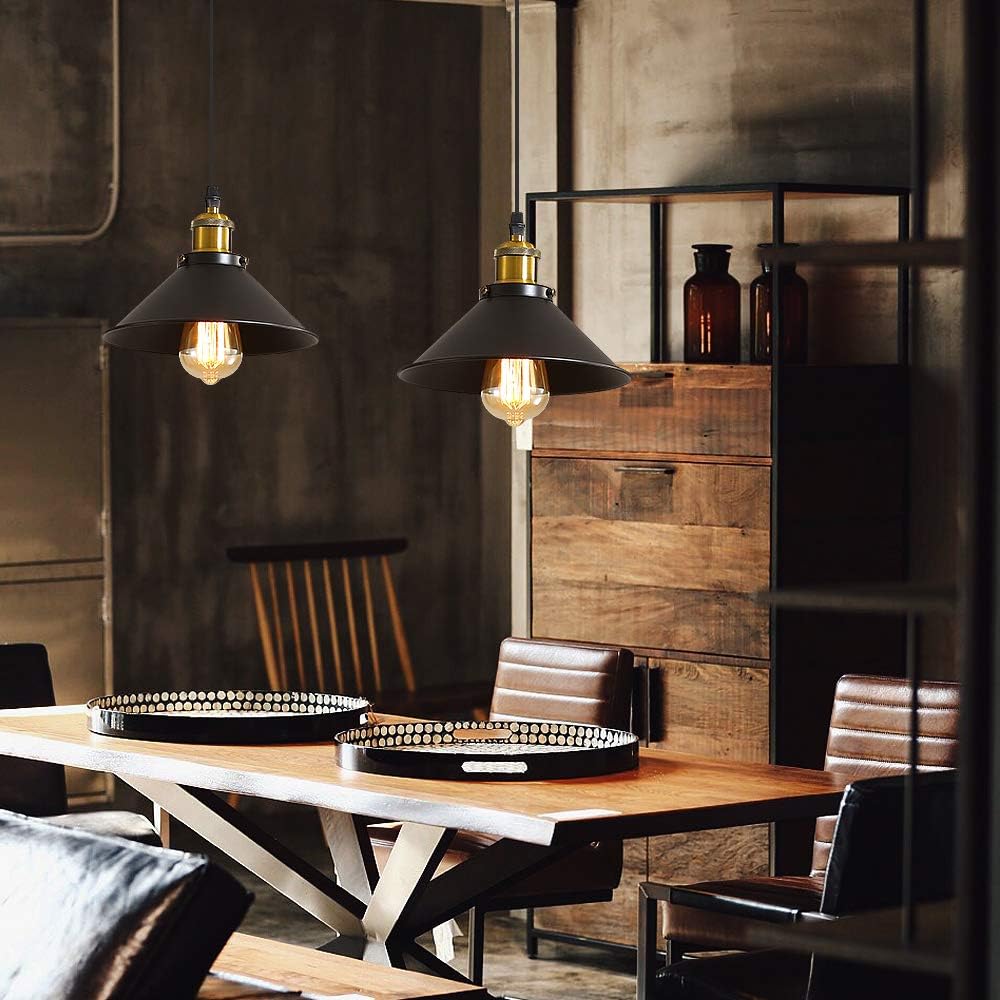
The pendant in a showroom photograph often hangs surprisingly low. It draws a neat circle of light over the dining table while the rest of the room sits in a softer glow. Copy the arrangement in a flat with an ordinary ceiling height, though, and the shade may be the first thing anyone sees when they sit down.
Lowering a pendant can make a dining area feel more enclosed. It can also interrupt conversation, create glare or make a room seem shorter. The distance between those outcomes is sometimes ten centimetres. The size and shape of the fitting decide how noticeable that difference becomes.
Why lower pendants can feel cosier
A pendant brought closer to the table creates a more distinct pool of light. It gives the dining area its own identity in an open-plan kitchen and living room. The surrounding walls can remain less brightly lit, provided there is enough other lighting for moving about and everyday tasks.
But a low fitting should still be comfortable from every seat. If a deep shade hangs in front of someone's face, the table feels crowded rather than welcoming. Exposed bulbs can cause another problem: lowering them may put the bright light source directly in a seated person's line of sight.
Above a dining table: start at 75–90 cm
A commonly used starting range is 75–90 cm between the tabletop and the lowest part of the pendant. Measure to the bottom of the shade, lamp or decorative detail, whichever hangs lowest. This is a working range rather than a universal rule.
For example, a table that stands 75 cm high with the pendant 80 cm above it puts the bottom of the fitting roughly 155 cm above the floor. That height would obstruct a walkway but can work over a fixed dining table, where nobody needs to walk directly underneath.
Pull out the chairs and sit at the table before making the cable length permanent. Check whether you can see a person opposite you without leaning around the fitting. Then imagine passing a serving dish across the centre. A wide, deep shade may need to sit near the upper end of the range.
For hallways and open living-room routes, measure from the floor
A dining-table measurement is unsuitable for a pendant hanging above a clear walking route. In entrances, hallways and open areas of a living room, approximately 210 cm of clear height from the finished floor is a common planning reference. Allow more for taller residents or if local requirements call for it. Check the product instructions as well.
With a finished ceiling height of 245 cm, keeping 210 cm below the fitting leaves just 35 cm from the ceiling to its lowest part. That includes the visible drop of the whole fitting, not just its cable. A large multi-tier chandelier is unlikely to be a comfortable choice in that space.
A pendant directly above a coffee table can sometimes hang lower because the table prevents people walking beneath it. Living rooms change, however. Someone may get up beside the table or push the sofa back. Test those movements before committing to a long drop.
What difference can 10 or 15 cm make?
Over a table, moving a pendant from 85 cm to 75 cm lowers the shade by just 10 cm. That can be enough for the rim of an opaque dome to cut across seated eye level. With a slim glass globe, the same adjustment may hardly affect the view at all.
Try two or three positions before shortening the flex. Start around 80–85 cm above the table, then compare a position 10 cm higher and another 10 cm lower if the fitting allows it. Check the view from the doorway, sofa and dining chairs. Keep the bulb and the rest of the room lighting the same during each comparison.
Ceiling height is only half the picture
A deep pendant under a 240 cm ceiling can dominate the room even when its bottom seems reasonably high above the table. In a room with a much taller ceiling, a small fitting kept close to the ceiling may look detached from the furniture below. Lowering it a little can restore the link between table and light.
Shade width also matters. A large, solid metal dome appears heavier than a wire frame or a transparent glass shade hung at the same height. A wider fitting may need more space around it, particularly if people use the sides of the table to move through the room.
Check the light itself before changing the drop
If the tabletop looks dim, lowering the pendant is only one possible adjustment. An opaque shade may direct most of its output into a narrow area, leaving the ends of a long table in shadow. Two smaller pendants or one linear fitting might cover the table more evenly.
Likewise, a clear shade can look airy while exposing a bulb that dazzles diners. A suitable diffused bulb, shade or dimmer, where compatible, can make the light more comfortable without moving the pendant. Wall lights or a floor lamp can soften the contrast between a bright table and dark walls.
Three mistakes worth avoiding
- Measuring the cable instead of the fixture. Use the lowest point of the installed fitting, including decorative drops.
- Judging the height while standing. Check seated sightlines, glare and the space needed to reach across the table.
- Copying a dining-table height into a walkway. Open floor areas need head clearance, and household members may be taller than the person planning the room.
A practical test before installation
Measure the ceiling, the tabletop and the body of the fitting. Calculate your first position, then hold or temporarily suspend the shade at that height only if the manufacturer's instructions permit. Sit at every place, walk around the table and check the result with the light on in the evening. Compare positions in 10 cm steps rather than guessing from a single view.
For fixed wiring or any uncertain mounting arrangement, use a qualified electrician. Follow the fitting's permitted cable range and check the applicable local requirements.
Frequently asked questions
Is 70 cm above the dining table too low?
It is below the usual 75–90 cm starting range. A compact or open fitting might work there, but test sightlines, glare and reaching across the table first.
Should I hang a pendant lower with a high ceiling?
You often have more scope above a fixed table. The final position still needs to work for people sitting there, not just for someone viewing the room from the doorway.
Can a glass pendant hang lower than a solid shade?
It may obscure less of the room, but a visible bulb can create more glare when it is closer to eye level.
How much headroom should I leave in a hallway?
About 210 cm from the finished floor to the lowest part of the fitting is a common starting point. Taller occupants and local requirements may call for more.
Is an adjustable pendant worth considering?
It allows you to revise the drop if you change the dining table or furniture layout. Check the adjustment limits before buying.
If you're torn between two heights, spend an ordinary evening with the pendant temporarily positioned at each one. Seeing everyone around the table comfortably is a more useful test than matching a photograph.