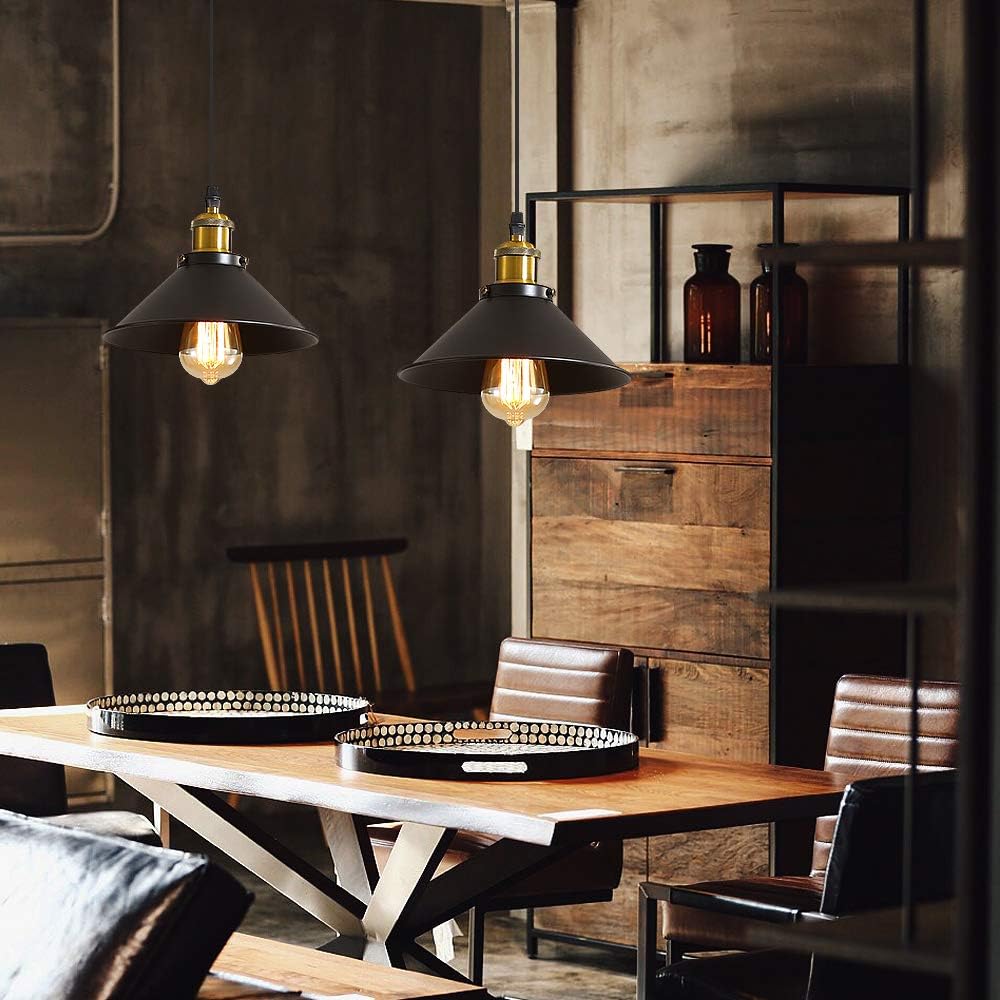
Do All Your Light Fixtures Need to Match? Can Every Room Have a Different Style?

Buying every light from the same collection feels safe. The finish matches, the shapes repeat and there is little risk of an obvious clash. Used throughout an entire home, however, that approach can make rooms with very different functions feel more uniform than they need to be.
Giving every room a completely unrelated fixture creates a different problem. The house can begin to feel like a sequence of separate projects. A more useful approach is to decide what should stay consistent and where the room itself justifies a change.
Why matching lights feels like the easy option
Light fixtures sit in prominent positions. They hang above tables, occupy the centre of ceilings and frame mirrors or beds. Repeating a finish or design language therefore creates an immediate visual link.
This is especially useful in open-plan homes. If the kitchen, dining area and living room are visible at the same time, three unrelated statement lights can compete for attention.
Different rooms need different things
A bedroom may benefit from softer, quieter lighting. A kitchen often needs brighter task light and fixtures that stay clear of working areas. A decorative pendant that suits a dining table may feel oversized in a narrow hallway.
Those practical differences justify changes in scale, shape and sometimes style. Repeating one design everywhere can make the lighting less suitable for the room.
What can connect different fixtures
Shared details can do the job without making every light identical. Matte black, brushed brass, opal glass, pale wood, rounded forms or thin linear frames can each create continuity.
You only need a few repeated cues. A brass pendant in the dining room can relate to a small brass wall light in the hallway even if one is sculptural and the other is very simple.
Spaces seen together need more continuity
An open living and dining area reads as one large room. The fixtures can be different, but they work better when they share a similar visual weight, finish or level of detail.
Two large sculptural lights placed close together often compete. One stronger focal fixture and one quieter supporting fixture usually gives the eye somewhere to settle.
Separate rooms can move further apart
A closed bedroom, bathroom or study can have a more distinct personality. A contemporary living room and a softer, more traditional bedroom can sit comfortably in the same home.
Floors, wall colours, timber tones, door hardware and textiles often provide enough continuity on their own. If those elements already connect the rooms, the lighting can vary more.
The risk of buying a complete lighting family
Matching pendants, ceiling lights, wall lights and table lamps make decisions faster. Repeating the same family in every room can also make the interior feel more like a showroom than a lived-in home.
A looser connection often looks more natural. Rounded forms might recur in several rooms while the materials change. Or one metal finish can tie together fixtures with very different silhouettes.
Can black, white and gold all appear in one home?
Yes, if each finish has a clear role. Black can define edges, white can recede against pale ceilings and gold can appear as a smaller warm accent.
The mix becomes harder to manage when every room introduces a new dominant finish that has no relationship to the furniture or architectural details nearby.
How to create consistency without matching everything
- Use one or two recurring finishes in spaces that are visible together.
- Choose fixture scale according to each room, not according to a matching set.
- Keep neighbouring rooms at a similar level of visual complexity.
- Avoid placing several strong statement fixtures in one sightline.
- Use furniture, wall colour and materials to connect different lighting styles.
- Save the biggest style changes for rooms behind doors.
FAQ
Do all light fixtures need to come from the same collection?
No. Repeated materials, finishes or shapes can connect completely different fixtures.
Can a bedroom have a more traditional light than the living room?
Yes. Separate rooms can carry different moods, particularly when flooring, wall colours or other materials still link the house together.
How many metal finishes can I mix?
Two main finishes are usually easy to manage. A third can work when it appears only in small amounts and already relates to another detail in the room.
What should I do in an open-plan living space?
Choose one main visual focus. Let the surrounding fixtures support it rather than asking every pendant or ceiling light to become a statement piece.
Before buying a full matching set, stand where several rooms can be seen at once. The fixtures in those sightlines need the strongest relationship. Rooms behind closed doors have much more freedom.